
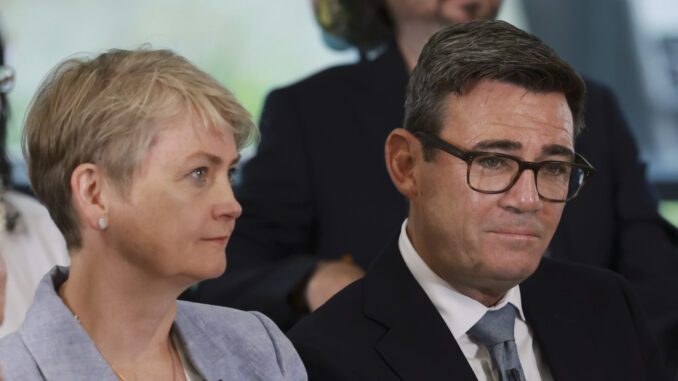
Wes Streeting is gone and replaced by Yvette Cooper. While many will be pleased to see the back of Wes Streeting, can we surmise enough from Cooper’s record in Government to tell whether this is good news for our NHS or not?
We do know that she has already made promises on social and maternity care, including promising to set national standards for maternity care to get rid of the ‘postcode lottery’ that currently dictates the quality of care women receive.
We also know that she is supportive of Andy Burnham’s proposed reforms to social care, making it clear that the social care system is badly broken, failing the people who use it and work in it. Cooper writes that “we badly need a system that gives people the dignity, support and security they deserve.” She goes on to promise that she will work “not just on reforming social care but on rebuilding our NHS which was so badly damaged and run down during the Tory years” (never mind the last two years under Labour). So far so good, though we have also had reason to be wary of statements made by Labour politicians on the NHS over the last two years.
Yvette Cooper has a long CV, having worked in a variety of senior roles in Cabinet and the shadow cabinet. Under Starmer, Cooper was the Home Secretary, before becoming Foreign Secretary in 2025. Cooper launched an ‘immigration crackdown’ that received a lot of pushback, including from Labour MPs for her ‘Border Security, Asylum and Immigration Bill’, which allowed the detention of child refugees for 28 days – an unnecessary and cruel way to treat anyone, let alone children. Cooper is also responsible for the proscription of Palestine Action, a draconian and deeply unpopular attack on protest rights that has led to Palestine activists being treated as terrorists and hundreds (if not thousands) of arrests.
In contrast, if not outright contradiction, while Foreign Secretary, Cooper oversaw the recognition of the state of Palestine, refused to join Trump’s war on Iran, and condemned the US’s actions in Venezuela. These do not undo her terrible record as Home Secretary, however.
There are also Cooper’s very concerning ties to private healthcare companies. The British Medical Journal (BMJ) revealed that Yvette Cooper has taken almost half a million pounds (£470k) in donations from Peter Hearn and his two companies, OPD Group and MPM Connect, between 2015 and 2024. Hearn has died recently. He was the founder of Odgers Berndtson – which provides headhunting services to the NHS and the private healthcare sector. He also owned its parent company, OPD Group. Odgers Berndston was involved in the inappropriate appointment of former TalkTalk executive Dido Harding, as the lead for the heavily criticised NHS Test and Trace programme during the Covid-19 pandemic. Harding was a close friend of Matt Hancock during his disastrous stint as Health Secretary.
In light of Cooper’s appointment as health secretary, this has raised concerns over the influence that Hearn (and by extension Odgers) may have, and is of significant concern. This is also the same Peter Hearn who funded large amounts to Wes Streeting.
As Keep Our NHS Public’s co-chair, Tony O’Sullivan, told the BMJ:
Andy Burnham has set out to rebuild trust that politicians work for the population. To succeed, he must set a new ethical standard for conduct in public office and he must put an end to ministers maintaining monetary conflicts of interest.… The last thing we need is the new Health Secretary’s heavy reliance on private health-related donations herself. ‘No such thing as a free lunch’ is a cliché with relevance. We need our public services to be led and championed by those in public office free from compromising relationships with competing private interests.
Cooper also has some relevant experience as Parliamentary Under-Secretary of State at the Department of Health from 1999 under Tony Bliar, and subsequently Minister of State before leaving Health in 2002. She pledged to integrate health and social care when she ran for leader of the Labour Party in 2015 – although she backed down from previous promises as Home Secretary and could well ignore more promises as Health Secretary.
Burnham’s appointment of Cooper as Health Secretary could be taken as an indication of how seriously he takes the crises in the NHS and Social Care system, wanting someone to lead on this who, unlike Streeting, has extensive experience in Government. Of course Burnham also knows the role well, having served as the Health Secretary from 2009-2010.
More broadly, Cooper’s record gives little indication that she will challenge the growing role of the private sector in the NHS. As a junior health minister she was part of a Labour government that substantially increased NHS spending and prioritised tackling health inequalities. But that same government embraced PFI and greater private-sector involvement in public services. Cooper may therefore be more willing than Streeting to argue for greater NHS investment, but there is little evidence that she will prioritise rebuilding publicly provided capacity over reliance on the private sector.
We hope that she will listen to NHS staff, patients and campaigners in addressing the most pressing issues that the health service faces. Social care is clearly a huge issue in its own right, and is not there simply to serve the interests of the NHS. It will take considerable political commitment to drive through meaningful reform given the inertia around this issue over many years.
With the right political will, the NHS and social care could be transformed as public services and come to serve the needs of the population. Burnham and his cabinet has expressed their willingness, but what the NHS truly needs is urgent change: proper funding and an end to the privatisation that runs rampant across the sector. This is where the Government’s biggest challenge will lie, and we must keep up the pressure to demand Burnham meets this challenge.
We have already released a comprehensive set of demands for Prime Minister Andy Burnham. He and Yvette Cooper would do well to listen to these too.
They should recommit to the NHS as a publicly funded, publicly provided and publicly accountable service. Public services must be treated as a national investment, not a drain on public finances. A functioning health service is essential economic infrastructure. When people cannot access timely care, more people are pushed out of work, families and carers are placed under pressure, and employers lose skills, experience and productivity. If health services fail, the economy feels the consequences. The social determinants of health cannot be ignored either: access to publicly provided care should be truly universal. The Government must recognise that inviting more privatisation and boosting the private sector fundamentally undermines this principle, and commit to ending private involvement in our NHS.
Finally, Burnham and Cooper must address urgent and emergency care as a national safety priority. Over 300 people are dying every week because of delayed admission to a ward from A&E and access to urgent treatment. This crisis reflects wider system failure: too few beds, delayed discharge, insufficient social care, staff shortages and years of lost capacity. It is also linked to pressure in other parts of the system, including general practice, dentistry, maternity, mental health and community care.
(This article was amended on two points on 17 August. Firstly, to note that Peter Hearn is reported to have died recently. Secondly, to clarify that people are dying avoidably after being seen in A&E and experiencing long delays before admission to to a ward for urgent treatment.)
Has KONP made it clear to Cooper and all campaigners- who need to repeat this message far and wide, to all who will listen – the the Government cannot run out of money, therefore it should be offering employment to all newly qualified midwives and other unemployed medical staff. Then it should consider whether it can physically mobilise resources to build and equip new facilities for the NHS. Then it should money is of no consequence – Keynes said that whatever the government cannot run out do, it can afford. The government’s job is to employ the country’s resources to benefit its people. Austerity has no place while we have unused capacity in the medical workforce.
Sorry my message got scrambled Should read “Whatever the government can do ie has the physical or human resources to do, it can afford to do.”