
NHS privatisation agenda working group
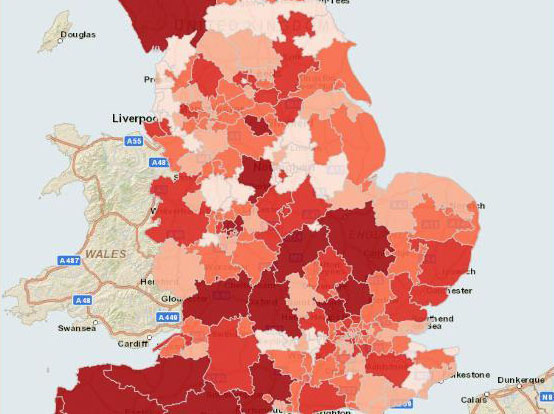
What are Integrated Care Systems?
NHS England introduced the term “Integrated Care System” in 2018 as a new name for “Accountable Care System”, a concept which campaigners had recognised as based on the US model of “Accountable Care”.
Six years earlier, the NHS was turned into a competitive market by the IHealth and Social Care Act in 2012. While retaining the market system, NHS England (NHSE) later declared that competition would be replaced by ‘integration’ of NHS, local authorities and other service providers. This ‘integration’ entailed the fragmentation of the national NHS into 42 semi-autonomous bodies eventually known as Integrated Care Systems (ICSs).
NHSE defines ICSs as:
“NHS organisations [which], in partnership with local councils and others, take collective responsibility for managing resources, delivering NHS standards, and improving the health of the population they serve.”
The ‘others’ they refer to include private companies. An ICS was to have a ‘single pot’ budget and its partners collectively decide how to delegate that budget to loosely defined local “places” within the ICS: one of the core aims has been to control the performance of the organisations within an ICS, including their financial performance.
Campaigners saw a key aim of this move was to control the performance of the organisations within an ICS, including their financial performance. This would be done “by imposing a universal set of NHS trust financial deficits based on arbitrary cash limits” and introduce “new models of care” that would reduce care in high cost settings, increase ‘self care’ and allow more scope for private companies, while potentially leading to co-payments and insurance-funded care for those who could afford it, as in the US.
The promotion of ‘integrated care’ can be traced to the World Economic Forum (WEF) an international platform for the world’s leading 1,000 companies. Its 2013 report on the financial sustainability of health care systems was co-authored by global management consultancy McKinsey, and the project steward was Simon Stevens, then President of Global Health, United Health Group and later Chief Executive of NHS England. The report’s conclusions included that
Health systems need to shift their focus to the integrated care that is necessary to identify patients most at risk, proactively plan and manage their care, and prevent escalation to higher cost.
Initially, NHSE promoted Accountable Care Organisations (ACOs) as one option for integration. In the US context, an ACO is a single organisation, comprised of groups of doctors, hospitals, and other providers, that takes on the risk and responsibility for providing, or subcontracting, all the care required for a defined area, or for people with a specific health need. Providers are offered incentives to improve care and cut costs, and receive a share of any savings.
A Judicial Review instigated by NHS campaigners resulted in an (unfulfilled) promise of a consultation on ACOs before they were introduced, but the term became toxic once it was clear that ACOs were a way of cutting services.
In 2026, the transitional CEO of NHSE, Jim Mackey, revived the taboo term ACO, later dubbed IHO (Integrated Health Organisation). This is despite concerns that ACOs are not compatible with the founding principles and values of the NHS; are publicly unaccountable and could lead to private companies taking on both the commissioning and provision of all care.
KONP strongly supports the integration of services where this improves patient care: many NHS and care staff already work hard to achieve this. But ICSs are first and foremost about making the organisations within an ICS work together to reduce patients’ use of NHS services and so save money. There are also concerns that ICSs further the privatisation of the NHS: they provide new opportunities for the private sector to both influence service provision and profit from public funding, as well as gaining increased access to patients’ health data.
NEW ICS DATABASES developed by the ICS Working Group can help campaigners find information about the NHS contracts that ICBs,Trusts and Foundation Trusts have signed with the private sector (such as how much they have spent on a contracted company or whether it has a track record of violating legislation).
➤ New articles
‘ACOs’: a taboo term is back on the NHS agenda
Greg Dropkin
Read/Download here (May 2025)
In this article Greg Dropkin writes that seven years ago NHS England (NHSE) made a sudden about turn in its march towards the US system of healthcare finance, known as “Accountable Care”. Sustainability and Transformation Partnerships, the 42 semi-autonomous bodies introduced by NHSE in its first attempt to fragment the national NHS, were intended to evolve into Accountable Care Organisations (ACOs). Some campaigners and unions spotted the dangers in moving towards the US model, and in response in January 2018 NHSE declared that “Accountable Care Systems” would now be called “Integrated Care Systems”, with no change to the concept, policy, or implementation.
Also see resource page of articles on our website Labour and the NHS
Background articles
- New Payment Scheme will have profound impact
Few patients, NHS staff or health campaigners have heard of the new Payment Scheme introduced by the Health and Care Act 2022. As the Bill went through Parliament, only Margaret Greenwood MP and Lord Hendy spoke out against the Scheme. But it will have a profound impact on the finance available in each Integrated Care System (ICS), and therefore on staffing and patient care.
Read/download full article… - For a critique of NHS England’s proposals for setting up ICSs (Integrating Care), and an explanation of the new opportunities they offer the private sector see: Corporate Agenda for Integrated Care, KONP, January 2021
- KONP comments on Integrating Care and an alternative vision for the future: See An alternative vision: achieving democratic accountability, by Keep Our NHS Public, January 2021
- KONP comments on Integrating Care and the implications for social care: See Social care: relationship to ICSs, by Keep Our NHS Public, January 2021
- A summary of key proposals, including for finance, workforce and data, as set out in the Department of Health and Social Care’s White Paper Health and Social Care integration: Joining up care for people, places and populations: See Notes on the White Paper ‘Health and social care integration: Joining up care for people, places and populations’ March 2022
- A critique of how each ICS has to obtain ‘best value’ when commissioning services: See The (mis)use of ‘value’ in Integrated Care Systems (ICSs) to enable financial cuts. (To read more about ‘value’ in healthcare, including the concept of ‘overuse’ in ‘allocative value’, see (URL link to Resources Cabinet)
- How the free flow of data between the public and private sectors is a top priority for our current government and how ICSs enable this. See The Integrated Care System as a key site for private companies’ access to patient data.
- NHS provider selection regime: response to consultation, July 2021 – proposes a reduction in regulation and scrutiny, no need for tendering, and help for private providers.
NHSE papers
NHSE’s report on Consultation on the White Paper: Legislating for ICSs